How’s Your Foresight? Does Your Strategic Plan Even Matter?


The phrase ‘thinking outside the box’ has aged well, but it has aged. A Wikipedia entry suggests it could date back to the 1880s. Or that it may have gained traction in the business world sometime in the 1950s. Regardless, it is often used to encourage more creative thinking, limit barriers, and expand possibilities when developing strategic futures efforts.
But really, are you thinking beyond the most desired future? Is your vision for your organization’s future based on broad ideas or contain specificity without adaptability? There’s a thin line between too broad and too specific.
Place yourself in a specific moment very early in 1990s. With America’s help, a protracted and failed invasion of the sovereign nation of Afghanistan helped dismantle the Soviet Union. It seemed organizations like NATO, the World Bank, and the United Nations inched closer to long-term stabilization of global balances of power. Many even went so far as to debate what exactly the United States should do with its enormous inheritance of power, dominance in international trade, and political influence over other nations. Without the ability to extend thinking beyond assumed confines of the contemporary balances, many national and industrial leaders were left ill-prepared for changes.
Consider that since that moment in the early 1990s, the United States has fought multiple wars and occupied nations in the Middle East, faced an increasingly indignant Russia, an economically assertive China, and threatening nuclear weapons programs in North Korea and Iran. The U.S. led the rest of the world into the internet age where information came to everyone’s fingertips. The European Union (EU) was formed and destabilization — political, economic, and social — produced multiple and persistent refugee movements. Within just the previous decade, polarized social and political movements threaten destabilization within the borders of many nations, including the U.S. An economic alliance formed between Brazil, Russia, India, China, and South Africa (BRICS), and terms like disinformation became a part of our national vernacular.
At the time of this writing, Russia is increasingly positioned as America’s ally after they invaded yet another sovereign nation, BRICS membership continues to grow, artificial intelligence has transformed from science fiction to freeware, membership in the EU has been questioned, and other forms of currency — including cryptocurrency — are threatening to replace the US dollar as the global standard.
Likely most of those changes, should they be presented as possible or plausible in 1994, would be met with “That would never happen.” Yet these changes came.
Research cited by Harvard Business Review shows that a significant percentage - ranging from 60% to 90% — of strategic plans fail to reach full implementation. The reasons for this failure vary, but poor execution is consistently identified as a major contributing factor. While this assessment is often accurate, it does not provide the complete picture. Many fail because they lack long-term value. They fail because the environment in which they were designed — the specific time and context — changed. More appropriately, the failure is in the CAPACITY TO ADAPT to changing environments — and even changing leadership. I use the word capacity intentionally as it can be expressed as a combination of two attributes within a workforce: capability and desire, or the more rhyming and memorable, skill and will. Some combination of the two attributes is needed to achieve anything, certainly something as expansive as an organization’s long-term and overarching strategic plan.
Misaligned goals pose a significant challenge to achieving strategic success and serve as a clear indicator of a flawed strategy. A study conducted in 2020 revealed that only 51% of companies make an effort to establish goals aligned to their strategic plan, with only 6% consistently revisiting them. The study — as does others — contends that organizations with misaligned strategic objectives tend to experience weaker outcomes compared to their strategically aligned counterparts.
Why are they misaligned? Often it’s because their strategic plan was so focused on what they wanted to happen, not how the world might change under their feet.

Still think your strategic plan is robust and meaningful?
Try this test:Go to your favorite GenAI tool and ask it to build you a strategic plan. Don’t even tell it what organization you work for. Go on, it’ll take only seconds. Then, compare what GenAI created for you and compare it to your organization’s most recent strategic plan. The language is likely to be very similar.
So then you have to ask yourself:Does our strategic plan reflect your organization’s unique needs and goals? Or is it just a set of tropes and common phrases?
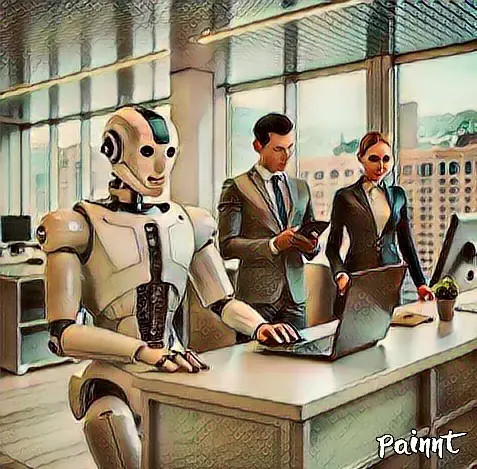
One solution is to apply foresight modeling. These efforts are collaborative in nature and bring perspectives from the depth and breadth of an organization. Structured to achieve vision beyond the next quarter or fiscal year, they extrapolate current trends into the future. They ask participants to consider What might happen next? or What might impact that trend? or Who or what might change our industry?
WHO SHOULD BUILD FUTURES INTO YOUR STRATEGIC PLAN? More often than not, the most intrigued participants, and the ones with the most daring ideas, are the ones that left college or joined the workforce in the previous five years. It would make sense that the younger generations have the most personal investment in a plausible scenario set ten years in the future. Let me say it like it is: My generation will be retired within ten years. With an innate propensity towards modernity, Millennials, Gen Z, and whomever you call ‘the kids today’ possess an innate ability to adapt quickly to tech-centric workplaces. With their diverse backgrounds and willingness to embrace change, the newest employees among us drive innovation and growth instead of prolonged adherance to outmoded ideas.
I want to end this with the message that I’m optimistic. Optimistic that the process I proposed in the previous pages aside, the premise behind strategic futures will gain traction on the softness of critical uncertainties as the newest employees of today ascend to leadership positions in the future.


Comments